
Why Are More Cubans Moving to Guyana?

Over the past few years, a quiet migration story has been unfolding in South America.
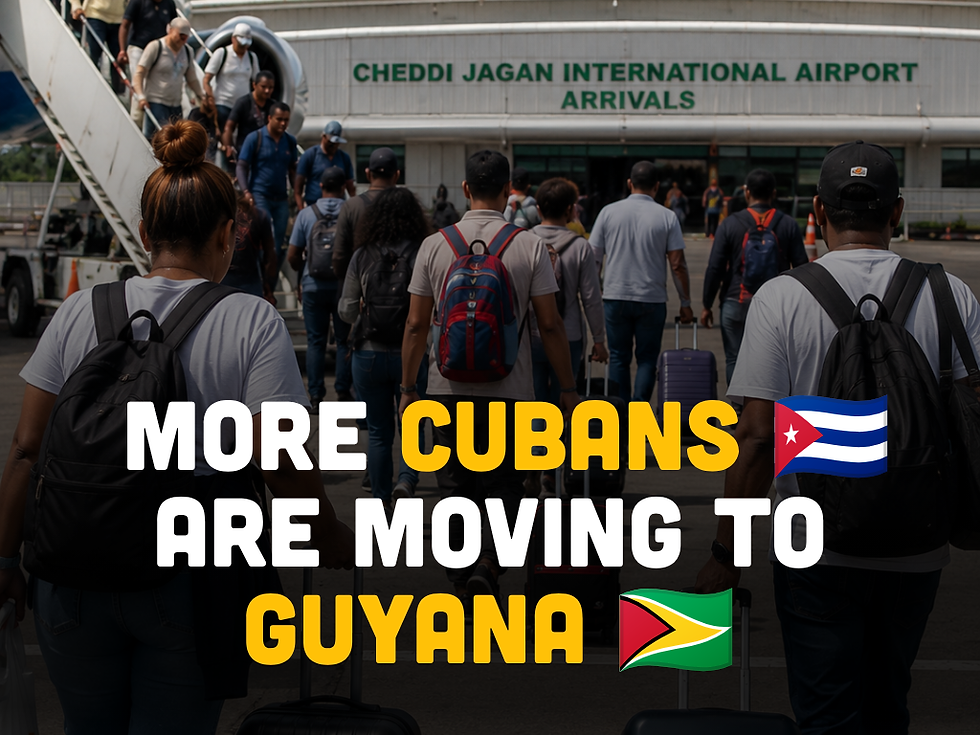
While international headlines often focus on Cubans travelling to the United States, Spain or Mexico, another destination has been steadily attracting thousands of Cuban migrants: Guyana.
For many people outside the Caribbean and South America, this comes as a surprise.
Guyana isn't usually the first country people associate with Cuban migration. Yet for thousands of Cubans, it has become a place of opportunity, transition and hope.
So, why is this happening?
The answer is more complex than many people realise.
Life in Cuba Has Become Increasingly Difficult
Leaving your home country is rarely an easy decision.
For most people, it means leaving behind family, friends, familiar places and everything you've ever known.
For many Cubans, migration isn't driven by a desire for adventure.
It's driven by necessity.
In recent years, Cuba has faced one of the most severe economic crises in decades. The country has experienced persistent shortages of food, medicine and fuel, alongside frequent power outages, rising inflation and limited employment opportunities. These challenges have affected almost every aspect of daily life, making it increasingly difficult for many families to meet their basic needs.
The New York Times reported on the worsening humanitarian and economic situation on the island, describing how millions of Cubans continue to face shortages that have prompted many to consider leaving in search of greater stability.
When daily life becomes a struggle, migration often becomes less about choice and more about survival.
Why Guyana?
Guyana may seem like an unexpected destination.
However, several factors have made it an important route for Cuban migrants.
Historically, Guyana has been one of the countries that Cubans have been able to travel to more easily than many other destinations. At the same time, Guyana's rapidly expanding economy has created new demand for workers across sectors including construction, hospitality, retail, transportation and services.
The country is currently experiencing one of the fastest-growing economies in the world, fuelled largely by offshore oil discoveries. While this growth has created opportunities, it has also increased demand for labour.
For many Cubans, Guyana offers something that has become increasingly difficult to find elsewhere:
The opportunity to start again.
It's important to recognise that for some migrants, Guyana is the final destination. For others, it may be one stage of a much longer migration journey. Regardless of their long-term plans, many spend months or even years building their lives there, working, renting homes, forming friendships and becoming part of local communities.
Starting Over Comes With Challenges
Arriving in a new country is only the beginning.
Finding employment.
Understanding public transport.
Opening a bank account.
Accessing healthcare.
Renting accommodation.
Building a new social network.
All of these everyday tasks become significantly more challenging when they must be
completed in another language.
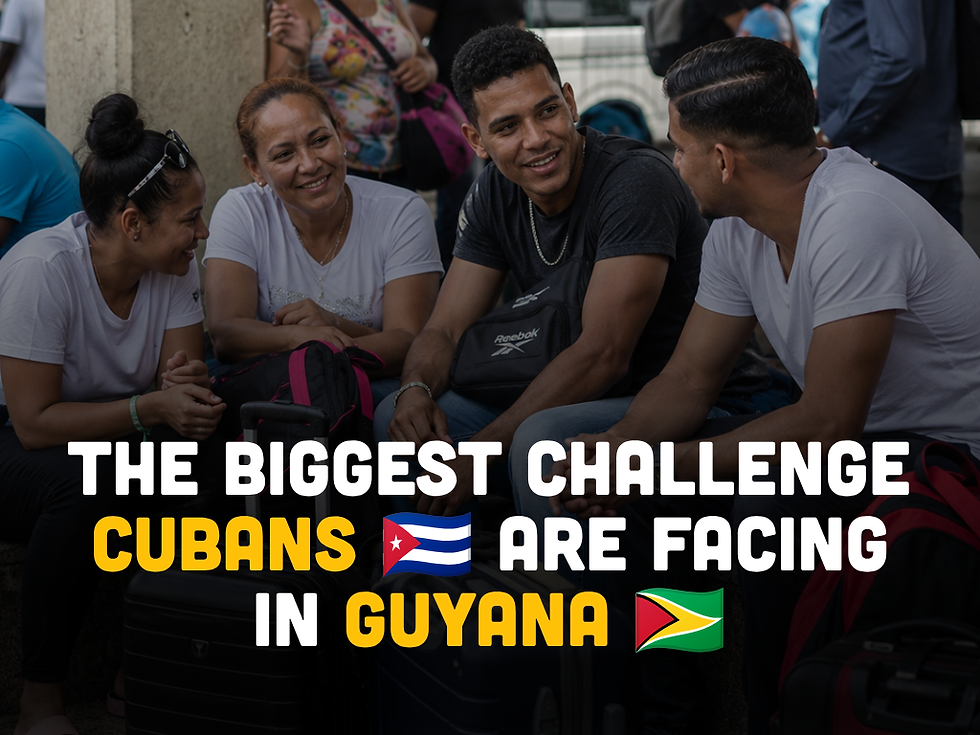
This week, Kaieteur News published an article highlighting the experiences of Cuban migrants in Guyana and the difficulties many encounter after arriving. Alongside finding work and adapting to a new environment, language continues to be one of the most significant barriers to integration.
English is the official language of Guyana, whereas Spanish is the first language for almost all Cuban migrants.
That means everyday interactions that many people take for granted, such as asking for directions, speaking with an employer or attending a doctor's appointment, can suddenly become intimidating.
Why I Started Help Cubans in Guyana
The more I learned about the experiences of Cuban migrants in Guyana, the more I realised there was one practical way I could contribute.
I decided to combine my experience in language education, my skills in project management and my passion for Cuba to create Help Cubans in Guyana.
This October, I'll be travelling to Guyana to deliver free conversational English classes for around 180 Cuban migrants.
The programme won't focus on passing exams or memorising grammar rules.
Instead, we'll practise the kinds of conversations people need every day: speaking with employers, attending job interviews, visiting the doctor, using public transport, renting accommodation and building confidence in real-life situations.
Looking Ahead
Migration is one of the defining stories of our time.
Behind every statistic is a person rebuilding their life, making difficult decisions and hoping for a better future.
While language won't solve every challenge someone faces after migration, it can open doors to employment, education, confidence and connection.
And sometimes, one conversation can be the first step towards feeling at home.

Comments